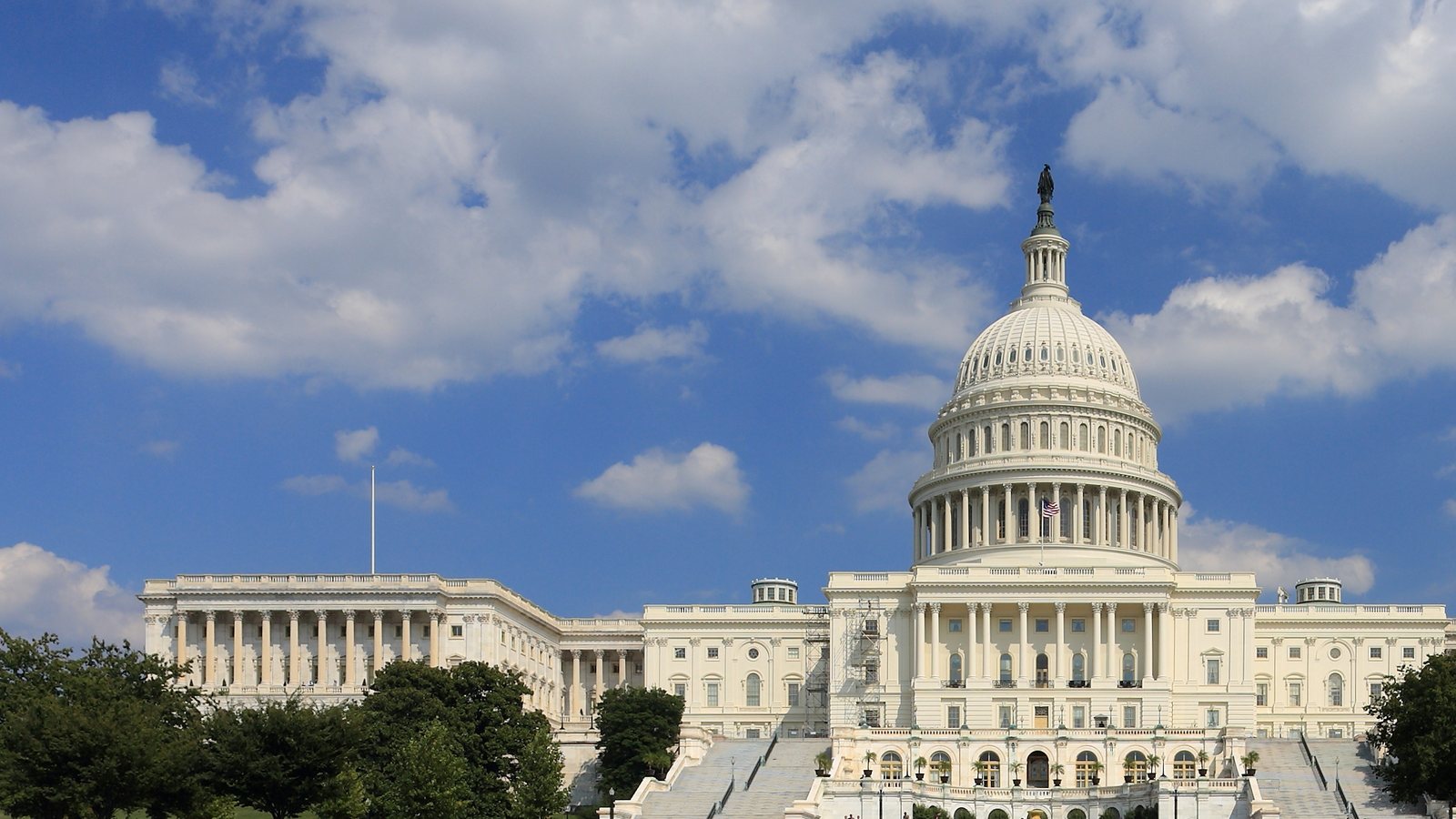
WASHINGTON - Each year, federal spending follows a process laid out in law and long custom, one that reporters often describe using terms such as appropriations, authorizations, and continuing resolutions without much explanation, even though those terms determine whether agencies open on time and paychecks go out on schedule. The process begins long before the fiscal year does, and it rarely proceeds in a straight line from start to finish.

The Request and the Resolution
The process formally opens when the President submits an annual budget request to Congress, a detailed proposal covering spending and revenue across the federal government. The request carries weight as a statement of priorities, but it does not carry the force of law. Congress is free to accept, reject, or rewrite any part of it, and lawmakers of both parties routinely do all three in the course of a normal year.
Congress may respond by adopting a budget resolution, a framework that sets overall spending and revenue targets and divides spending among broad categories. The resolution is a blueprint rather than a spending bill itself. It does not go to the President for signature and does not by itself fund any agency. Its purpose is to guide the committees that write the actual spending legislation and, in some years, to unlock a separate track known as budget reconciliation, a procedure that allows certain tax and spending bills tied to the budget resolution to pass the Senate with a simple majority rather than the higher threshold ordinarily needed to close debate.
A recurring source of confusion is the difference between authorizing a program and funding it. An authorization bill establishes or renews a federal program and may recommend a level of spending, but it does not itself provide money that an agency can spend. Only an appropriation, a separate category of legislation, actually grants federal agencies the legal authority to draw funds from the Treasury. A program can be fully authorized in law and still receive no money in a given year if Congress does not separately appropriate it, a gap that surprises many people encountering the process for the first time.
Twelve Bills, Twelve Committees
Appropriations for the discretionary part of the federal budget, the portion Congress funds anew each year, are traditionally divided among twelve regular bills, each covering a cluster of agencies and programs, such as defense, transportation, or labor and health programs. In both the House and Senate, a subcommittee dedicated to each of the twelve bills drafts and marks up the legislation before it reaches the full Appropriations Committee and then the floor of each chamber. In principle, all twelve bills pass both chambers, move through a process to resolve differences between the House and Senate versions, and reach the President's desk before the fiscal year begins.
The federal fiscal year begins on October 1 and runs through the end of September the following year, a date set in statute rather than tied to the calendar year. In practice, Congress has frequently not finished all twelve bills by that date, which sets the stage for one of the process's most familiar workarounds.
When one or more appropriations bills are not enacted by October 1, Congress commonly passes a continuing resolution, a stopgap measure that extends funding at existing levels for a set period so agencies can keep operating while negotiations continue. Continuing resolutions are meant to serve as temporary bridges, though in practice they are sometimes renewed repeatedly across a single fiscal year, standing in for regular appropriations for months at a stretch.
If neither a continuing resolution nor a full appropriations bill is enacted before existing funding lapses, the affected agencies experience what is commonly called a government shutdown. Agencies must then curtail operations, generally continuing only work deemed essential to safety and to law, while other functions pause until funding resumes. A shutdown is a lapse in appropriations, not a suspension of the underlying laws that authorize agencies to exist, and normal operations typically resume once funding is restored.
Rather than complete twelve separate bills on schedule, Congress frequently combines several of the regular appropriations bills, sometimes all of them, into a single large piece of legislation known as an omnibus bill, often passed under time pressure close to a deadline. Omnibus packages allow lawmakers to resolve many disputes in one vote, but they also draw criticism for moving substantial spending through a single vote with limited time for individual review.
The process commonly jams at a handful of predictable points: disagreement over the total level of spending contemplated in the budget resolution, disputes over policy provisions attached to individual bills rather than the spending levels themselves, and the calendar pressure of moving twelve bills through two chambers before an October deadline that arrives every year regardless of how much work remains unfinished. Understanding these pressure points helps explain why, in many years, a process built around a fixed autumn deadline instead produces its most consequential decisions in the weeks just before, or just after, that deadline has already come and gone.
Open the X thread / post ↗ · @NASA
For local service context, see Brainrecoverycenters.