From the file. Written for the paper dated November 1995. Opened in the public stacks July 14, 2026.
In the world of particle physics, excitement often swells around the latest discoveries, but this week we delve into the mundane mechanisms that drive the science behind the headlines.
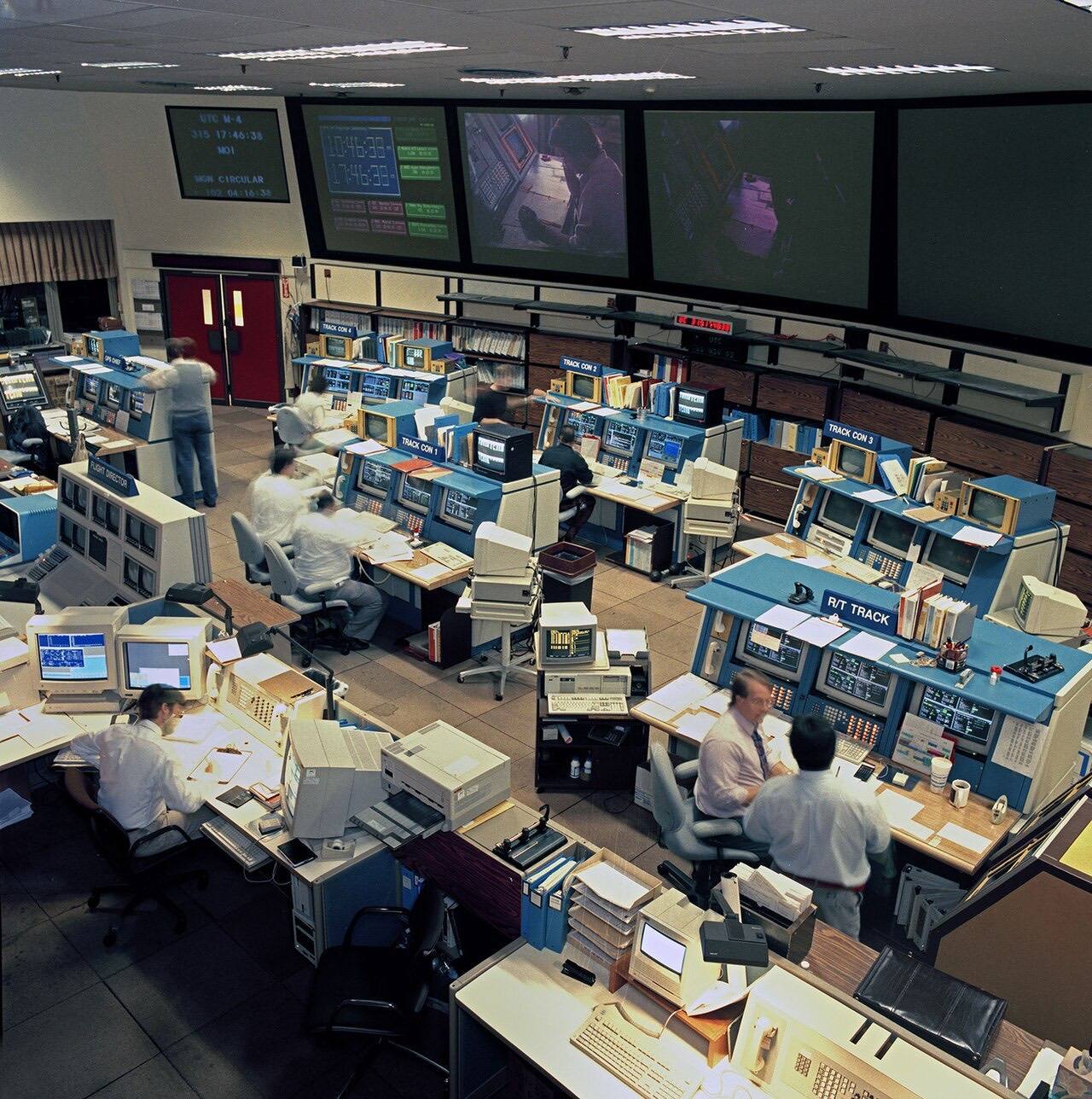
The Heart of Particle Physics
While the public's attention is captivated by sensational announcements of groundbreaking discoveries, the true essence of particle physics lies in the intricate and often tedious experiments that precede such revelations. Last week, researchers at the Stanford Linear Accelerator Center (SLAC) continued their work on the Stanford Linear Collider, a facility that epitomizes the painstaking nature of particle experimentation.
At SLAC, physicists are not just shooting particles at one another; they are meticulously measuring the outcomes of those collisions. The collider operates by accelerating electrons to near-light speed before smashing them into positrons. The results yield a flurry of data, but it is in the analysis of this data where the real work begins. Each collision can produce hundreds of particles, and sifting through this information is akin to finding a needle in a haystack.

As physicists comb through the results, they rely on a variety of detection technologies, including wire chambers and calorimeters, which track the trajectories and energy of the produced particles. These instruments are not glamorous; they are often bulky, and their calibration takes time and patience. Yet, without this foundational work, any claims of new particle discoveries would be hollow, lacking the rigorous validation needed to advance our understanding of the universe.
Beyond the Buzzwords
In the current landscape of scientific research, there is a tendency for both the media and the scientific community to prioritize flashy announcements over the essential, albeit less exciting, groundwork that leads to those moments. The public hears about the Higgs boson and dark matter, but rarely do they learn about the thousands of hours spent in labs, the failed experiments, and the incremental progress that characterizes particle physics.
“Scientific breakthroughs are often the result of years of tedious work and collaboration.”
This brings us to a significant issue: the pressure on scientists to produce results that capture public imagination can sometimes lead to excessive claims. A recent example can be found in the discussions surrounding the search for supersymmetry. Some physicists have suggested that evidence of supersymmetry is just around the corner, but this optimism can be misleading. The reality is that the evidence remains elusive, and the journey to validate these theories demands meticulous experimentation.
On the other hand, there is a growing sense of skepticism among certain factions of the scientific community. The push for sensational results has led to a few cases of overhyped findings that do not stand up to scrutiny. This has fostered an environment where some researchers are wary of making bold claims, fearing backlash if their results do not meet the expectations set by their more exuberant colleagues.
The Balancing Act
As we navigate this complex landscape, it becomes evident that both extremes - overzealous claims and excessive caution - can hinder scientific progress. The excitement of discovery must be tempered with an appreciation for the rigorous methodology that underpins it. The media, too, plays a pivotal role in this process, as sensationalism can overshadow the reality of scientific inquiry.
Take, for instance, the recent media frenzy surrounding the discovery of a new particle that some touted as a “game changer” in particle physics. While the find was indeed intriguing, the details revealed that the particle's properties were not fully understood, and further research was necessary. Yet, the headlines painted a picture of certainty that the research could not yet support. This disconnect between public perception and scientific reality is a recurring theme that must be addressed.
A Call for Realism
Ultimately, the field of particle physics thrives on collaboration, patience, and a commitment to rigorous methodologies. As the scientific community continues to explore the frontiers of knowledge, it is imperative that both scientists and journalists commit to a realistic portrayal of the process. The excitement of discovery should not overshadow the importance of the scientific method. Rather, it should enhance our understanding of the intricate dance between theory, experimentation, and validation.
As we look ahead, let us champion the unsung heroes of science - the researchers who toil away in laboratories, grappling with complex data and striving to make sense of the universe's mysteries. Their work may not always generate headlines, but it is the backbone of progress in the field. In a time when sensationalism often reigns, it is our responsibility to advocate for the thorough and often mundane processes that drive true scientific advancement.
✦ ✦ ✦