From the file. Written for the paper dated May 1990. Opened in the public stacks July 14, 2026.
As the specter of a government shutdown looms larger, both parties appear to be indulging in a dangerous game of brinkmanship that threatens to paralyze the very institutions designed to serve the American public.
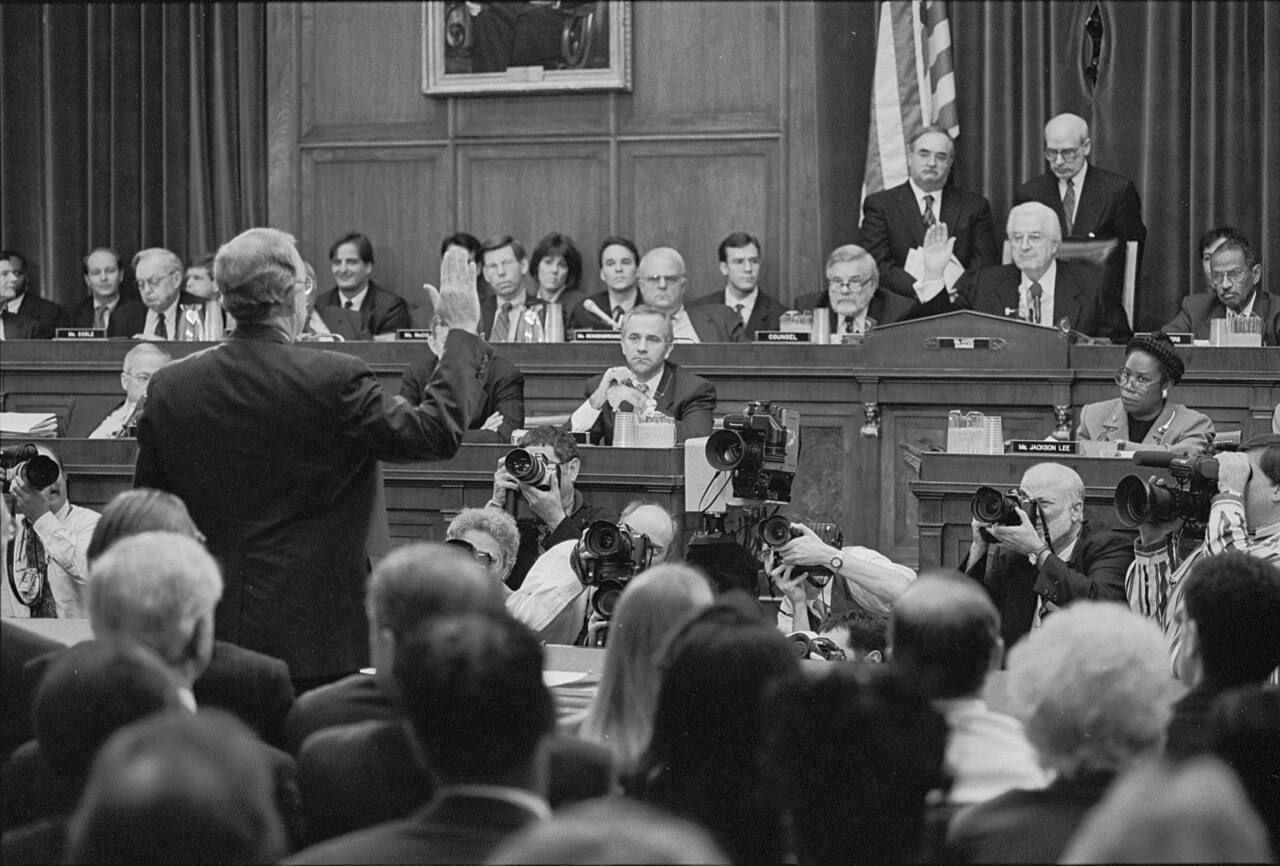
Brinkmanship and Selective Memory
In the political arena, the term "shutdown" has become synonymous with the dysfunction that plagues Washington. However, what is often overlooked is the bipartisan habit of selective memory that both sides exhibit when discussing the causes and consequences of these impending crises. The current standoff is not merely a product of one party's failure but rather a culmination of years of political gamesmanship.
In the past, Republicans and Democrats alike have engaged in brinkmanship, often using the threat of a government shutdown as leverage to push through their agendas. This has created a political environment where the stakes are so high that rational debate is often drowned out by fear and outrage. The selective memory of both parties allows them to cast themselves as the heroes in a narrative that conveniently forgets their own role in creating the chaos.
"The current standoff is not merely a product of one party's failure but rather a culmination of years of political gamesmanship."
Take, for example, the recent debates surrounding budgetary constraints. The Democrats often paint themselves as the champions of social programs and public welfare, while the Republicans brandish the sword of fiscal responsibility. Yet, both parties have a history of overspending when in power, and both have, at times, turned a blind eye to the implications of their decisions. This selective amnesia leads to an environment where neither side is willing to take responsibility for the mess they have collectively created.
Furthermore, the media often plays into this narrative, amplifying the partisan divide rather than holding both sides accountable. The sensationalism surrounding the potential government shutdown has resulted in a frenzy of headlines that focus on the immediate fallout without examining the underlying issues. This lack of critical analysis only serves to perpetuate the cycle of blame and avoidance that has become all too familiar in our political discourse.
In the current climate, the stakes are higher than ever. A government shutdown would not only disrupt essential services but also affect countless citizens who rely on government programs. Yet, rather than engaging in constructive dialogue, both sides seem more interested in scoring political points. The Republicans, for instance, have increasingly leaned into their image of fiscal conservatism while ignoring the practical implications of cutting essential services. The Democrats, on the other hand, have positioned themselves as defenders of the vulnerable, yet their own budgeting practices have often betrayed this image.
The irony is palpable. As the parties engage in a blame game, they forget that the real victims of this brinkmanship are the American people, who are left in limbo as their elected representatives engage in petty squabbles. The result is a political landscape that is increasingly polarized, with little room for compromise or cooperation.
To break this cycle, it is essential for both parties to acknowledge their roles in the current state of affairs. This means moving beyond rhetoric and recognizing that the government is not merely a pawn in a political chess game but a critical institution that supports the fabric of society. The challenge lies in overcoming the instinct to demonize the opposition and instead focus on finding common ground that serves the greater good.
Moving Forward
As we move closer to a potential government shutdown, it is incumbent upon our leaders to prioritize the interests of the American people over their political ambitions. This requires a willingness to engage in honest dialogue and a commitment to addressing the underlying issues that have led us to this impasse. Both Republicans and Democrats must recognize that their selective memory and political posturing are not just damaging to their parties, but detrimental to the country as a whole.
In this moment, the American public is watching closely. They are tired of the gamesmanship and demand accountability from their elected officials. If both parties can find the courage to confront their own shortcomings and work towards a solution, they may just avert a crisis that could have lasting consequences for the nation.
✦ ✦ ✦