From the file. Written for the paper dated March 1990. Opened in the public stacks July 14, 2026.
In the political theater of March 1990, line item politics has taken center stage, revealing the excesses of both the left and the right as they maneuver for power and influence.
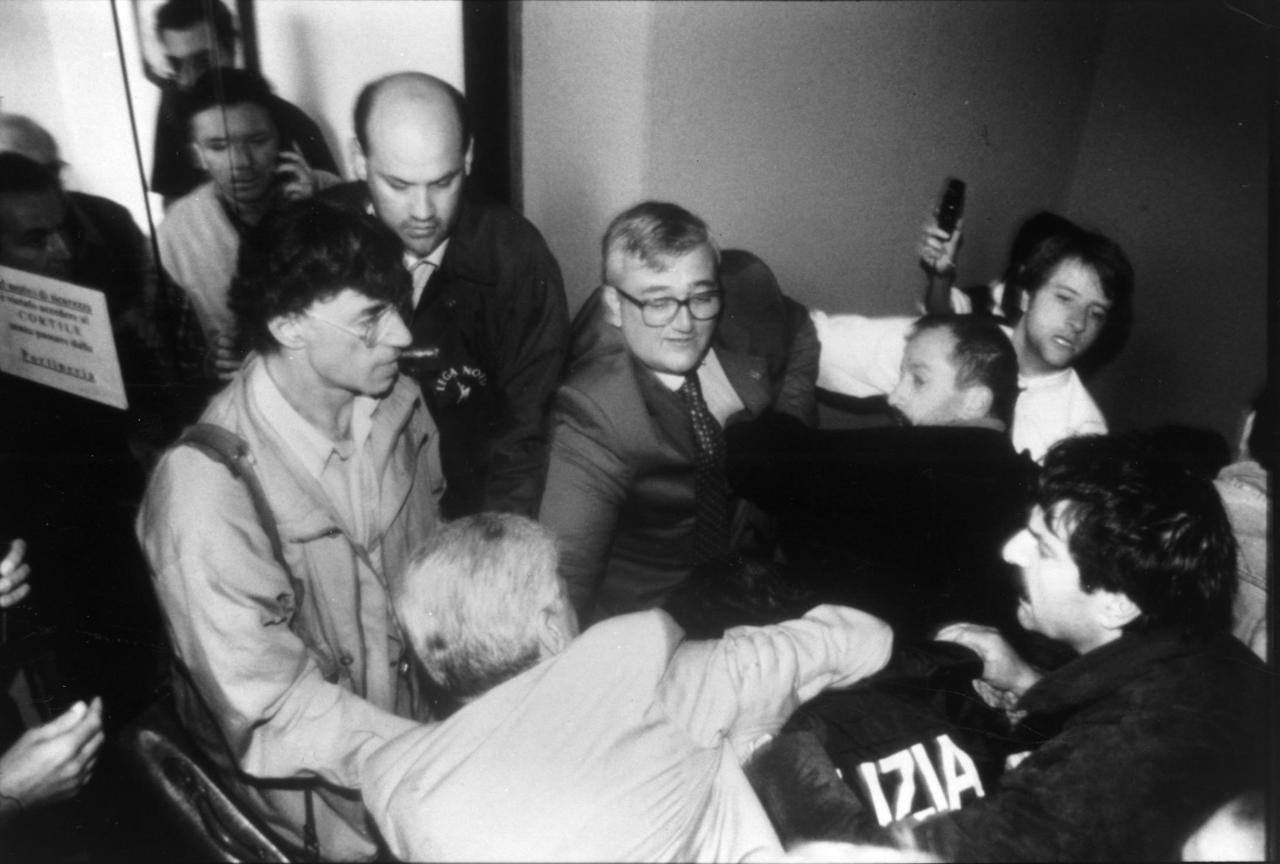
The Tug of War: Left and Right
As Congress debates budget allocations, the battle lines are drawn between those advocating for social programs and those pushing for fiscal conservatism. The left, often championing the cause of the underprivileged, is accused of indulging in a spending spree that overlooks economic realities. Meanwhile, the right, with its relentless focus on reducing government spending, risks neglecting the needs of vulnerable communities.
The left's argument for increased funding in social welfare programs is compelling at first glance. Advocates point to growing poverty rates and a healthcare system that leaves many uninsured. Yet, in their zeal to expand these programs, they sometimes turn a blind eye to the implications of adding further debt to an already strained budget. It raises a pressing question: at what point does the pursuit of a safety net become an unsustainable burden on taxpayers?

On the other side of the aisle, conservatives are wielding their fiscal responsibility banner with fervor. They argue that the government has been bloated with excessive spending, pointing to the increasing national debt. Yet, their dogmatic approach often ignores the real human consequences of slashing funding for education, health care, and housing assistance. The push for austerity can feel like a war on the very citizens they claim to protect.
“In the tug of war over line item politics, both sides risk losing sight of the individuals they are meant to serve.”
The Middle Ground: A New Approach
What is needed is a middle-ground approach that acknowledges the valid concerns of both ends of the political spectrum. Instead of treating line item politics as a zero-sum game, there needs to be a concerted effort to find solutions that serve both fiscal responsibility and social justice. Compromise is not a dirty word; rather, it is a path toward sustainable governance.
One viable solution could involve re-evaluating current spending priorities. Instead of blanket cuts or unfettered increases, the government could implement targeted investments in programs that show proven results. For instance, funding for early childhood education has shown significant returns in long-term societal benefits - reducing crime rates and increasing job readiness. Such investments could be framed as both a moral imperative and a strategic economic decision.
Public Sentiment and Political Consequences
Public sentiment appears to be shifting as citizens grow weary of the partisan bickering that has characterized recent years. Polls suggest that voters are increasingly frustrated with the extremes and are calling for political figures who can bridge the divide. This presents an opportunity for moderates to step forward and offer a pragmatic vision for governance.
In this charged atmosphere, it is imperative that political leaders listen to the voices of their constituents. The message is clear: they want solutions, not slogans. The era of line item politics must evolve from a battleground of extremes to a forum for constructive dialogue. This shift will not be easy, but it is essential for the health of our democracy.
The Role of Media in Politics
As journalists, we bear a responsibility to report these developments with nuance and depth. The narratives we construct can either exacerbate the divisions or contribute to a more informed electorate. It is our duty to highlight not only the conflicts but also the cooperation that can arise when stakeholders from different backgrounds come together to find common ground.
In conclusion, the current political climate offers a critical moment for reflection and action. If the left and right can move beyond their entrenched positions and recognize the merits of compromise, they may find that the path to progress is not only possible but also beneficial for all. The stakes are high, and the time for action is now.
✦ ✦ ✦