From the file. Written for the paper dated November 1984. Opened in the public stacks July 14, 2026.
As the specter of a government shutdown looms ever larger over the political landscape, the responsibility for this precarious situation lies squarely on the shoulders of both Democrats and Republicans. Each party, it seems, is more interested in leveraging the crisis for political gain than in finding a bipartisan solution that serves the interests of the American people.
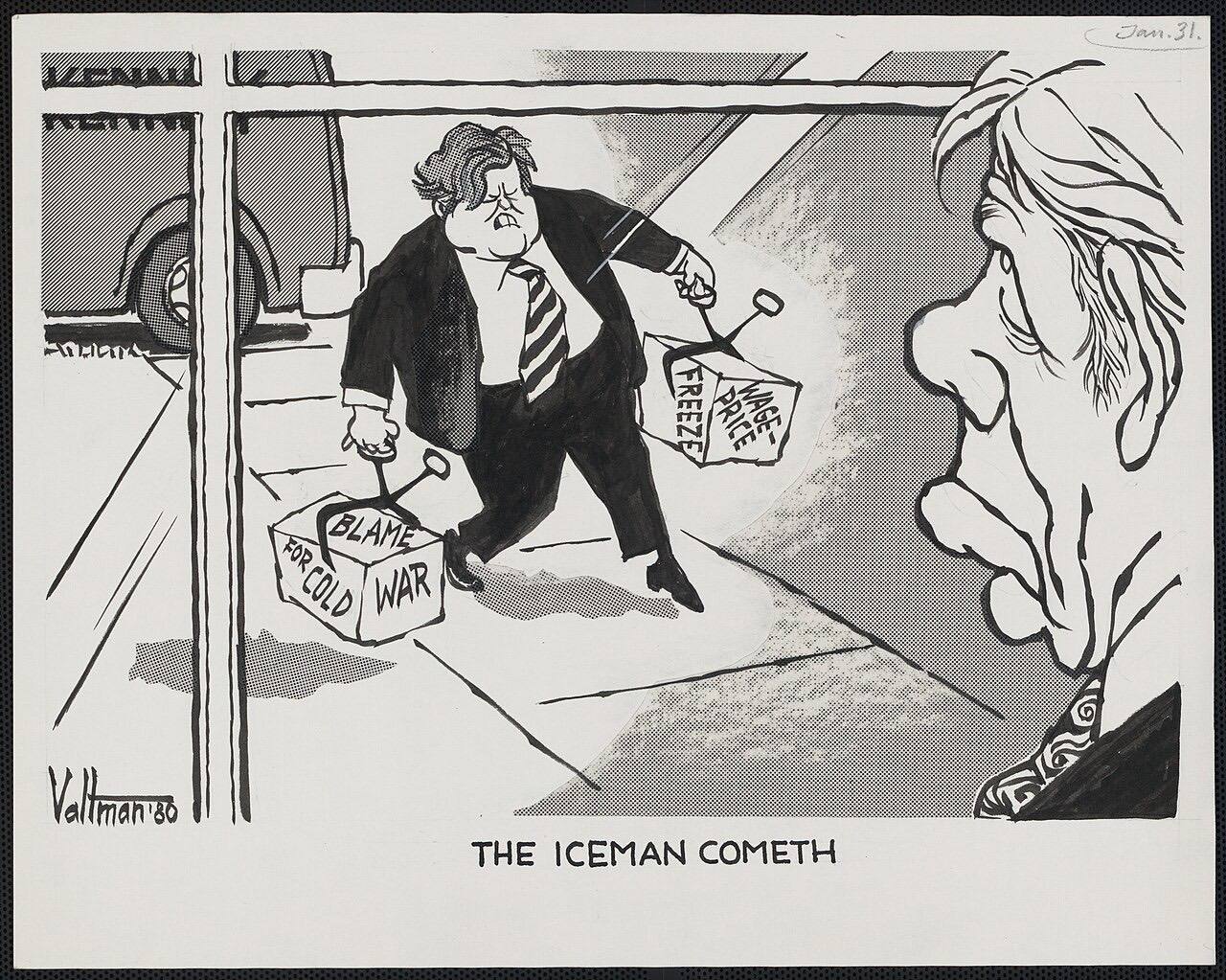
The Stakes Are High
The current political climate is charged with tension, as both sides are entrenched in their respective positions. On one hand, we have the Republicans, who are rallying around fiscal conservatism and the need to curb government spending. Their insistence on significant budget cuts has become a rallying cry, but it seems increasingly less about fiscal responsibility and more about ideological purity. This position, while rooted in a legitimate concern for government overreach, risks ignoring the immediate needs of many Americans who depend on essential services.
On the other hand, the Democrats are equally culpable in this game of brinkmanship. Their reluctance to entertain cuts, coupled with their willingness to defend government programs to the last breath, can appear more like a defensive posture than a constructive approach to governance. This tendency to cling to past successes without adapting to the current economic realities is a recipe for disaster, and it comes at a cost to those who rely on government assistance and services.
Both parties have a vested interest in maintaining the status quo, even if it means risking a government shutdown.
Political Incentives and Consequences
What is particularly troubling is the incentive structure that both parties have created for themselves. For Republicans, the threat of a government shutdown can galvanize their base, allowing them to position themselves as defenders of taxpayer interests. This moment serves as a potent reminder of their commitment to fiscal restraint, but at what cost? The potential fallout from a shutdown could be disastrous for many Americans, yet the party seems willing to gamble on the public's willingness to endure hardship for the sake of ideological victory.
Meanwhile, Democrats are equally complicit in this dangerous game. The prospect of a shutdown presents an opportunity for them to paint Republicans as the villains, eager to inflict pain on ordinary citizens. This narrative plays well to their base, but it distracts from the need for genuine dialogue and compromise. By framing the discussion as a battle of good versus evil rather than a complex policy negotiation, they risk alienating moderate voters who crave a more pragmatic approach.
The Impact on Everyday Americans
As these two parties engage in their high-stakes game of political chess, the real consequences are borne by everyday Americans. Federal employees face uncertainty regarding their livelihoods, families dependent on government programs are left in limbo, and the overall economy suffers from the instability created by political posturing. It is a grim reminder that while politicians bicker, it is the citizens who pay the price.
With the stakes so high, one must wonder why both parties are so willing to dance on the edge of a shutdown. The simple answer lies in the incentives created by a polarized political environment. Each side believes that a government shutdown could yield a tactical advantage in the long term, but they often overlook the immediate and tangible impacts on the lives of millions.
Seeking Common Ground
As we approach the precipice of a government shutdown, it is imperative that leaders from both sides of the aisle recognize the urgency of the situation. The time for political gamesmanship must yield to the need for collaboration and compromise. The American public deserves better than a spectacle of finger-pointing and blame-shifting, and it is incumbent upon our elected officials to rise above the fray.
There are solutions to be found if both parties can look past their ideological divides. Budget negotiations should not be a zero-sum game, but rather a chance to prioritize the needs of constituents over partisan ambitions. The reality is that Americans are looking for leadership that transcends party lines, and that can only happen when both sides are willing to engage in meaningful dialogue.
Conclusion: A Call to Responsibility
The looming threat of a government shutdown is a stark reminder of the dysfunction that has come to define our political landscape. Both Democrats and Republicans must take a step back and consider the consequences of their actions. The time for posturing is over; real leadership requires the courage to compromise for the greater good. It is only through collaboration that we can hope to avoid the pitfalls of political brinkmanship and ensure stability for the American people.
✦ ✦ ✦