From the file. Written for the paper dated June 1979. Opened in the public stacks July 14, 2026.
In the current political landscape, the clash over federalism is not just a matter of state versus federal control; it exposes the deep fractures and incentives present on both sides of the aisle.
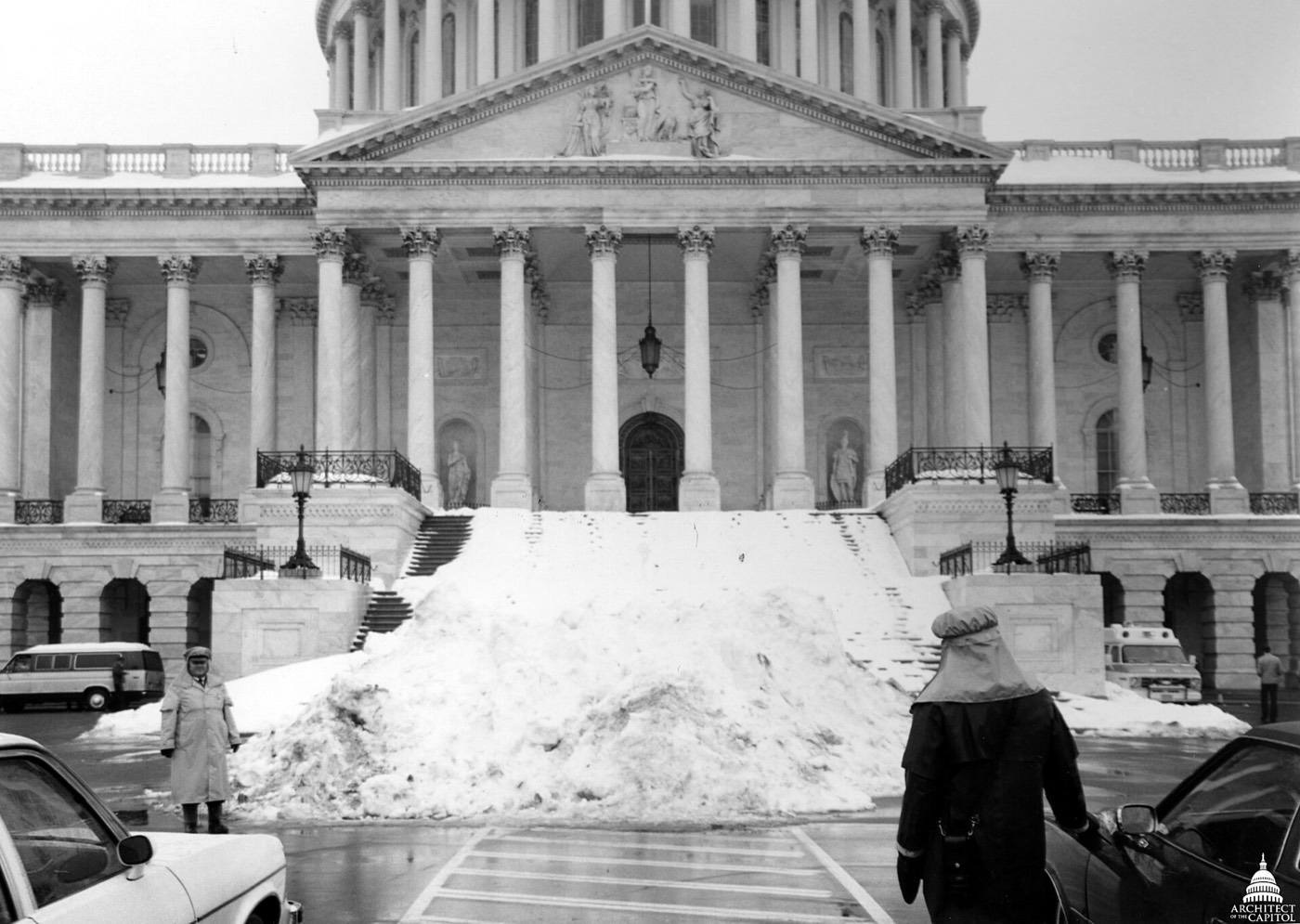
The State of Federalism
As the country finds itself mired in debates over states’ rights versus federal authority, one cannot overlook the competing incentives that drive both Republican and Democratic agendas. The ideological battle is fierce, and yet, both sides appear to be playing a high-stakes game with the very fabric of our union.
On one end, we have the Republicans, who argue for a return to the principles of limited government and states’ rights. Their rhetoric often appeals to the notion that local jurisdictions can better address the unique needs of their communities. However, lurking beneath this façade of localism is a stark reality: many Republican leaders are motivated not by a genuine belief in federalism but by a desire to dismantle federal programs that they believe are bloated and ineffective.
Consider the current debates surrounding welfare reform. Many Republican lawmakers are pushing for significant cuts to federal welfare programs, arguing that states should assume greater responsibility. While this may sound appealing, it raises a critical question: are these cuts truly about empowering states or simply a means to shrink the federal budget at the expense of the most vulnerable populations?
On the flip side, the Democrats are equally guilty of wielding federal power as a blunt instrument. In their quest for social justice and equality, they often advocate for extensive federal intervention in areas traditionally governed by states, such as education and healthcare. This push for expansive federal control reveals an underlying incentive: to consolidate power and resources at the national level, ostensibly to enact progressive policies that might otherwise stall at the state level.
While Democrats argue that federal oversight is necessary to ensure equal access to services, one must consider the implications. Are they genuinely committed to uplifting communities, or are they perpetuating a dependency on federal programs that may ultimately stifle local autonomy?
The Consequences of Extremes
This tug-of-war over federalism demonstrates the lengths to which both parties will go to achieve their goals, often at the expense of coherent policy-making and the well-being of citizens. The extremes to which both sides have gravitated are not only harmful to the political discourse but also to the very notion of governance in America.
Republicans have often been accused of obstructing social progress by reducing federal funding for programs that serve the disadvantaged. Their insistence on states taking over welfare programs may lead to a patchwork of services where the poor receive drastically different levels of support depending on their geographic location. This is hardly the equitable society that many claim to strive for.
Conversely, the Democrats risk alienating the very constituents they wish to help by overreaching with federal mandates. While well-intentioned, their policies can inadvertently undermine state innovations and local solutions that may be more effective in addressing specific community needs. As the push for federal regulations intensifies, the danger of a one-size-fits-all approach looms large.
"The extremes to which both sides have gravitated are not only harmful to the political discourse but also to the very notion of governance in America."
A Call for Balance
The solution to this federalism clash lies not in the extremes but in finding a balance that respects both state autonomy and the need for federal oversight in critical areas. It is possible to empower states while maintaining essential federal standards that protect the rights and well-being of all Americans.
Finding this balance requires a willingness from both parties to engage in genuine dialogue, rather than resorting to partisan posturing. It calls for an acknowledgment that neither side holds a monopoly on the truth concerning governance. Compromise and collaboration are essential in crafting policies that genuinely reflect the needs of the people.
As we navigate these complex waters, it is crucial to remember that federalism is not merely a theoretical construct; it is a living principle that impacts the daily lives of Americans. The decisions made today will resonate for generations to come. The urgency of this moment demands that we rise above ideological dogma and work toward solutions that honor the diverse tapestry of our nation.
✦ ✦ ✦