From the file. Written for the paper dated March 1973. Opened in the public stacks July 14, 2026.
As the dust settles after President Nixon's recent State of the Union address, it is vital to step back from the partisan fray and analyze the aftermath with a clear lens. Both sides of the political spectrum appear more entrenched in their respective ideologies than ever, but what is most alarming is the quiet failure of oversight that has emerged in the wake of this address.
The Partisan Divide
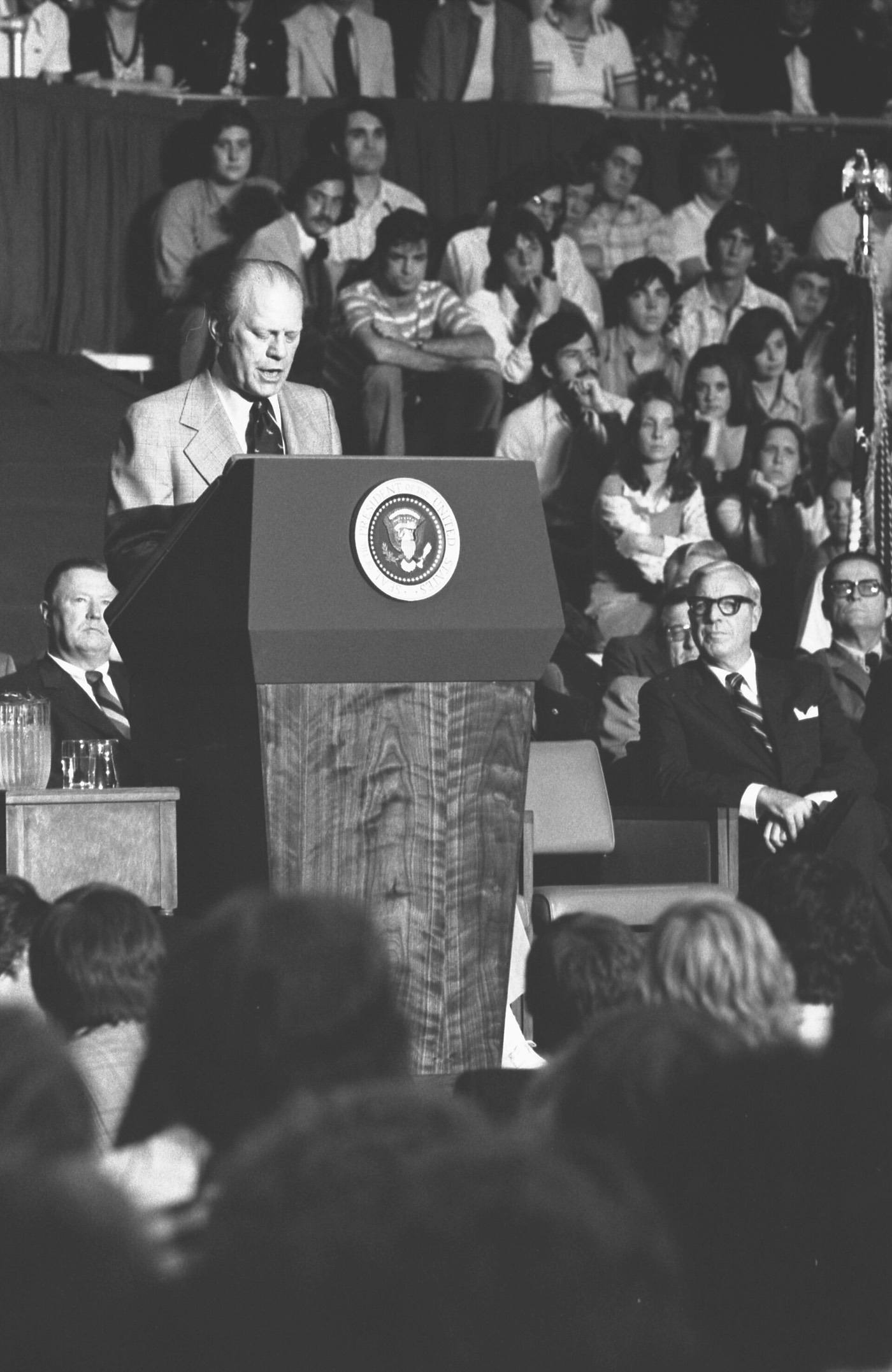
In the grand theater of American politics, the State of the Union serves as the stage where the President outlines his vision, and the opposition takes up arms - each side clad in its respective team jersey. However, this year’s spectacle revealed a more profound issue that transcends party lines: a deterioration of accountability and a lapse in the collective responsibility that should characterize our government.
The President's speech, while filled with promises of progress and prosperity, was met with predictable responses from both sides. Republicans rallied behind the rhetoric, while Democrats dismissed it as empty. Yet, amidst the clamor, essential questions about oversight and governance were left unaddressed. The failure to scrutinize the implications of policies presented in the address highlights a worrying trend toward blind adherence to party loyalty.
"The quiet failure of oversight is a bipartisan issue. Both parties must share the blame for prioritizing politics over accountability."
Blind Loyalty Over Accountability
As we sift through the reactions to the State of the Union, one must ask: where is the accountability? The soaring rhetoric about economic growth and national security may resonate with party loyalists, but it begs for a critical examination. The President's assurances about jobs and stability come at a time when inflation is creeping and the Vietnam War continues to cast a long shadow over our society. Yet, few politicians have publicly questioned these contradictions, preferring to march in lockstep with their party lines.
For Democrats, the impulse to oppose has led to a tendency to dismiss the merits of certain policies outright, without offering viable alternatives. As a result, constructive dialogue has been overshadowed by accusations and rebuttals. This refusal to engage in meaningful debate has only served to deepen the divide and hinder effective governance.
Excesses of the Left
On the left, there is a palpable frustration with the status quo, driving some to adopt increasingly radical positions. The calls for sweeping reforms in social policy and economic structures are valid, yet they risk alienating moderates who might otherwise be allies in the quest for change. Instead of fostering collaboration, the left’s more extreme factions seem intent on pushing their agenda without regard for the implications on governance or the broader electorate.
This radicalism is not just a hindrance; it is a distraction from the critical issues at hand. The American public deserves a reasoned approach to the challenges we face, rather than a series of extreme demands that may never see the light of day in Congress. If the left continues to prioritize ideological purity over pragmatic solutions, it risks rendering itself ineffective.
Excesses of the Right
Conversely, the right has found itself grappling with its own excesses. The rhetoric surrounding law and order has escalated to a point where it often overshadows the need for civil rights and social justice. While it is crucial to support our law enforcement agencies, it is equally important to ensure that policies do not disproportionately affect marginalized communities. The failure to recognize this balance poses a significant risk to the very fabric of our democracy.
Moreover, the right's unwavering support for the President, even in the face of controversies surrounding the Vietnam War and domestic policies, creates an echo chamber that stifles dissent. There is a dangerous complacency that arises when party loyalty supersedes the need for genuine oversight. The public deserves leaders who will challenge the status quo when necessary, rather than simply defending it for the sake of party allegiance.
A Call for Reflection
As we navigate this complex political landscape, it is essential for both sides to step back and reflect on the current state of our democracy. The failure of oversight is not merely a function of one party or the other; it is a systemic issue that demands attention. A political environment characterized by extreme partisanship and a lack of accountability is detrimental to the health of our nation.
We must remember that governance is not a game, and the stakes are far too high to allow party loyalty to overshadow our collective responsibility. The State of the Union should not be a moment for celebration of party victories but rather an opportunity for constructive dialogue and genuine accountability.
✦ ✦ ✦