From the file. Written for the paper dated October 2026. Opened in the public stacks July 14, 2026.
As extreme weather events continue to dominate headlines, the reliability of weather models comes under scrutiny, revealing the dual role of institutions in both protecting public safety and shielding themselves from accountability.
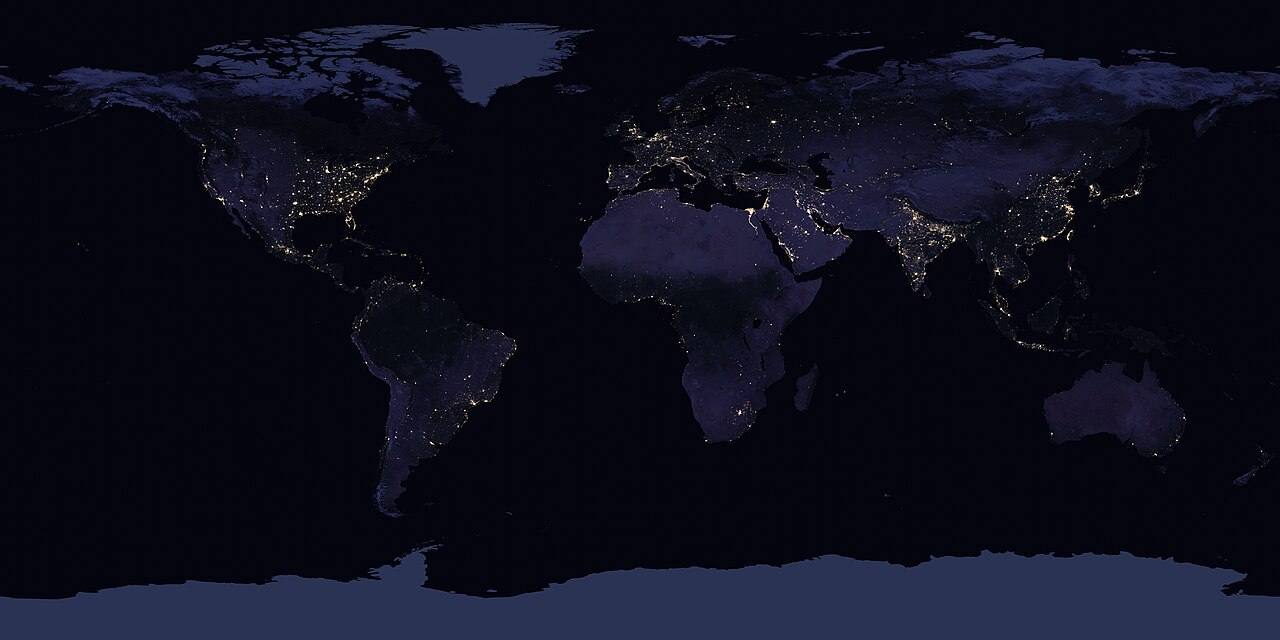
Understanding the Complexity of Weather Models
Weather models have become indispensable tools for meteorologists and decision-makers alike. These sophisticated algorithms analyze vast amounts of data to predict weather patterns, yet their complexity can lead to misinterpretations and public confusion. Despite the advancements in technology, the accuracy of these models remains a subject of debate. Critics argue that while institutions tout their successes, they often downplay the limitations and uncertainties inherent in their forecasts.
"We need to balance the science of prediction with the realities of public communication." - Meteorologist
Institutions, from government agencies to private weather companies, face immense pressure to provide accurate predictions - especially in the face of mounting climate-related disasters. Yet, when forecasts go awry, it becomes evident that protecting institutional credibility often takes precedence over acknowledging the shortcomings of the models. This protective instinct can lead to a cycle of misleading representations and public distrust.
Institutional Accountability and Public Trust
The duality of weather forecasting - scientific rigor versus institutional self-preservation - raises critical questions about accountability. In recent years, there have been instances where agencies minimized the impact of model inaccuracies, leading to catastrophic outcomes. As storms intensified and heat waves became more severe, the public turned to these institutions for guidance, only to find themselves misled by overly optimistic predictions.
While the public often seeks clarity and certainty, the nature of weather forecasting is inherently uncertain. This paradox places institutions in a precarious position. On one hand, they strive to offer decisive guidance; on the other, they must navigate the ambiguity of their models. This tension is exacerbated by the polarized media landscape, where sensationalism can overshadow scientific nuance, leading to further erosion of trust.
The Left and Right: A Political Lens on Weather Forecasting
In today's polarized environment, the narratives surrounding weather predictions have become entwined with political ideologies. On the left, there is a tendency to emphasize the catastrophic impacts of climate change, often calling for urgent action based on alarming forecasts. Conversely, the right frequently critiques these models, branding them as fear-mongering and questioning the motivations behind climate science. Both extremes risk oversimplifying a complex issue, leading to a public that is either overly anxious or dismissive of legitimate concerns.

"We need to approach climate discussions with a balance of urgency and realism." - Climate Policy Expert
This polarization has profound implications for how weather information is received and acted upon by the public. When institutions lean into political narratives, they risk compromising their credibility. The challenge lies in presenting the facts with sufficient nuance, ensuring that the public grasps the reality of the situation without succumbing to alarmism or denial.
Reassessing the Role of Technology in Forecasting
With the rise of advanced technology, including machine learning and big data analytics, there is a growing expectation for ever-more precise weather predictions. However, it is crucial to recognize that technology is not a panacea. As institutions invest in these tools, they must remain transparent about the limitations and uncertainties that accompany them. The promise of technology should not overshadow the need for a cautious approach to forecasting.
In this context, there is an urgent need for institutions to recalibrate their communication strategies. This includes fostering an environment where scientists and meteorologists can openly discuss the uncertainties of their models without fear of institutional backlash. Only through such transparency can trust be rebuilt with a public that increasingly demands accountability.
Moving Forward: A Call for Balanced Discourse
As we navigate an era of unprecedented weather extremes, the importance of accurate and responsible weather modeling cannot be overstated. Institutions must prioritize public safety while also committing to honest discourse about the limitations of their forecasts. This is not merely a matter of institutional integrity; it is an essential step toward fostering a well-informed public.
Ultimately, both the left and the right must recognize that weather forecasting is a nuanced science requiring cooperation and understanding across the political spectrum. The stakes are too high for divisive rhetoric that undermines the essential work of meteorologists and the institutions that support them.
✦ ✦ ✦