From the file. Written for the paper dated April 2008. Opened in the public stacks July 14, 2026.
In the wake of natural disasters, the focus often shifts to recovery efforts and the immediate needs of affected communities. However, behind the scenes, the machinery of government and institutional response often reveals a more self-serving agenda.
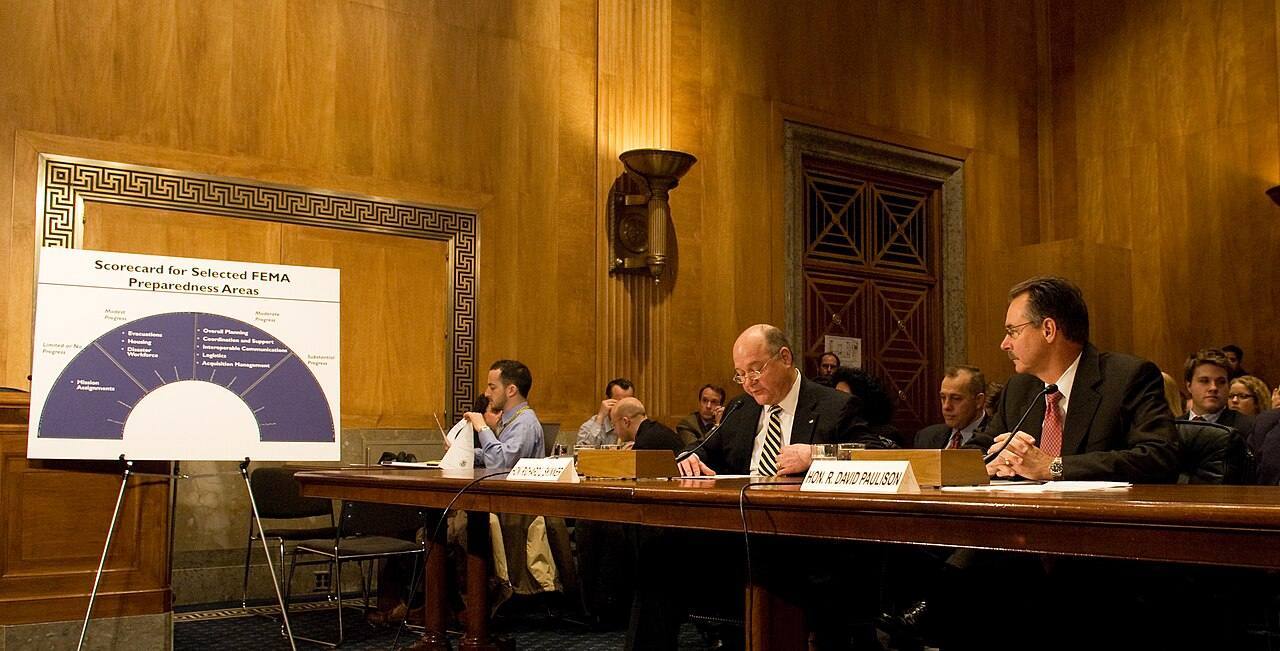
Disaster Declarations: A Shield for Institutions
As communities across America grapple with the aftermath of devastating natural calamities, the declaration of a disaster zone serves as a crucial tool for federal and state governments. While the intent behind such declarations is ostensibly to facilitate aid to those in need, the reality often reflects an underlying objective: to protect institutional interests.
Consider the recent disaster declarations issued in response to severe flooding in the Midwest. While residents are left to salvage what remains of their homes and livelihoods, government agencies scramble to ensure that their protocols and funding streams remain intact. The declaration of a disaster zone not only unlocks federal funds but also grants agencies the ability to stave off criticism about their preparedness and responsiveness.
Disaster declarations are as much about protecting institutions as they are about aiding affected citizens.
In recent years, we have seen a troubling trend where the efficacy of disaster response has been overshadowed by bureaucratic inertia. The aftermath of Hurricane Katrina in 2005 revealed critical failures in coordination among federal, state, and local agencies. Although the lessons learned from such tragedies are often touted, the reality is that institutions have a remarkable ability to revert to form, prioritizing their operational continuity over the urgent needs of the communities they serve.
On the left, the response to disasters often hinges on an expansion of government, suggesting that increased funding and resources will solve the problems at hand. This perspective frequently overlooks the reality that additional resources can exacerbate inefficiencies. For instance, the Federal Emergency Management Agency (FEMA) has been criticized for its slow response times and cumbersome processes, regardless of the funding it receives. Critics argue that the bureaucratic tendencies of government agencies can often lead to a misallocation of resources that fails to meet the immediate needs of those affected by disasters.
Conversely, the right often champions deregulation and local control as solutions. While these principles resonate well in theory, they can lead to a dangerous underestimation of the complexities involved in disaster response. In the face of catastrophic events, the reliance on local entities can result in a patchwork of responses, where some communities receive ample support while others are left to fend for themselves. This disparity raises questions about equity and fairness in disaster response, which is particularly troubling when the most vulnerable populations are often the hardest hit.
As the political discourse surrounding disaster response unfolds, it is crucial to remain vigilant about the narratives being constructed by both sides. The left’s push for greater government intervention can sometimes overlook the accountability that should accompany such measures. Meanwhile, the right’s advocacy for local control often fails to address the inherent inequalities that can arise when resources are distributed unevenly across regions.
Moreover, the media plays a significant role in shaping public perception of disaster responses. Coverage tends to be episodic, focusing on dramatic images of devastation and the heroics of first responders. While these stories are important, they often gloss over the systemic issues that plague the response effort. Once the initial headlines fade, the attention of policymakers - and the public - can swiftly turn away from ongoing recovery efforts, leaving communities to navigate the complexities of rebuilding without adequate support.
The question remains: how do we hold institutions accountable for their roles in disaster response? As citizens, we must advocate for transparency and efficiency in the processes that govern disaster declarations and responses. It is essential to push for evaluations of agencies like FEMA, demanding that they prioritize the needs of affected individuals over their institutional interests.
In the coming months, as disaster responses evolve and new calamities arise, it is crucial to scrutinize the narratives emerging from both sides of the political spectrum. We must remain vigilant against the pitfalls of bureaucratic inertia and the unequal distribution of resources that often accompany disaster declarations. Only through a commitment to accountability and advocacy can we hope to create a more equitable and responsive disaster management system.
Looking Ahead: A Call for Action
In an era of increasing climate volatility, the frequency and severity of natural disasters are likely to rise. As such, the need for a robust, accountable disaster response system is more pressing than ever. We must advocate not only for immediate aid but also for long-term reforms that prioritize the needs of communities over institutional self-preservation.
As we reflect on the current political landscape, let us challenge both the left and the right to rise above their excesses. Together, we can forge a path toward a more just and effective disaster response framework that genuinely serves the interests of all Americans.
✦ ✦ ✦