From the file. Written for the paper dated June 2000. Opened in the public stacks July 14, 2026.
In a climate where accountability seems to be a mere buzzword, oversight hearings are becoming less about genuine scrutiny and more about the theater of politics.
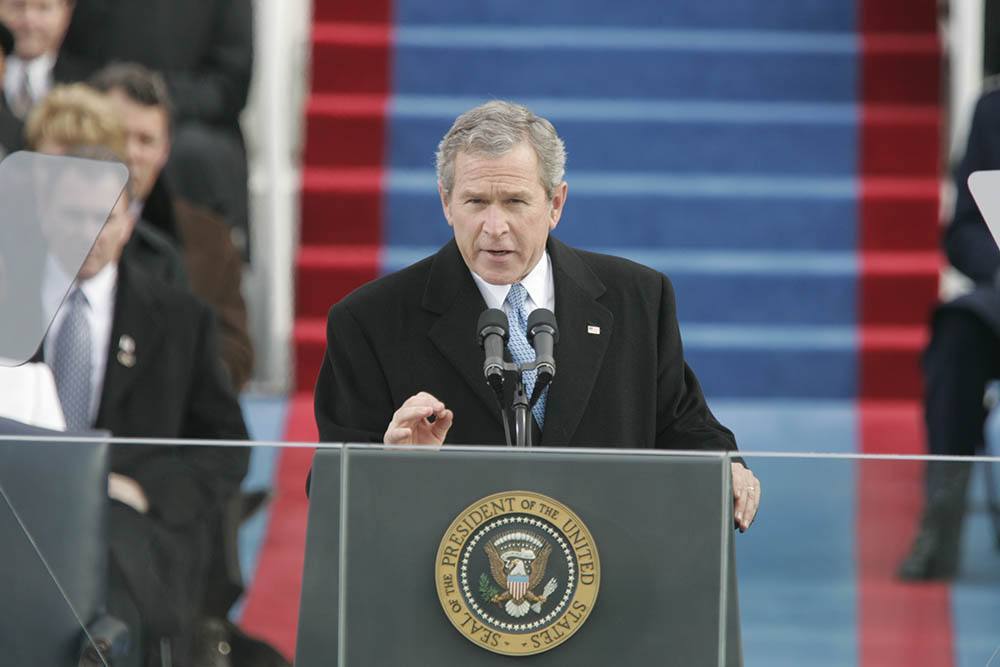
The Political Stage
The recent oversight hearing on Capitol Hill was a spectacle that left many questioning whether the institution of Congress is more interested in protecting itself than in providing the transparency that the public demands. As members of both parties took turns at the microphone, it became evident that the real game being played was not one of accountability, but rather a ritualistic display designed to placate an increasingly disillusioned electorate.
This hearing, which aimed to investigate potential misconduct in a key government agency, unfolded in a manner that felt rehearsed. Questions were often softballs, and critical answers were met with deflections rather than direct responses. The hearing's format allowed for grandstanding but not for genuine inquiry. Both sides of the aisle seemed more focused on scoring points against each other rather than uncovering the truth for the American people.

"It appears that both sides are more interested in their public images than in the accountability of government."
Protecting the Institution
As the hearings progressed, it became increasingly clear that protecting the institution of Congress itself was the primary goal. Members were quick to rally around their colleagues, and partisan lines were drawn not just in terms of party affiliation but also in the defense of one another's questionable actions. This camaraderie among legislators, regardless of party, suggests a troubling priority: the preservation of the institution over the pursuit of truth.
This phenomenon is not new, but it seems to be intensifying. When the Democratic Party held the majority, the hearings often served as platforms for attacking the previous administration's policies while glossing over their own missteps. Now, with the Republican majority, the roles have reversed, and the same pattern persists. It raises the question: are these institutions serving the public interest, or are they merely safeguarding their own existence?
Moreover, the lack of genuine oversight can lead to a culture of complacency. When there are no real repercussions for misconduct, the message sent is clear: accountability is optional. This is not just a concern for the present but a harbinger of future governance challenges. When institutions prioritize self-preservation over accountability, they risk losing the very legitimacy they claim to uphold.
The Left's Overreach
On the left, there is a tendency to frame every oversight hearing as an opportunity to launch a full-scale offensive against perceived corruption. While holding the powerful accountable is essential, the approach often comes across as excessive, bordering on hysteria. This can lead to a scenario where important issues get lost in a barrage of accusations, making it harder for the public to discern the truth.
In this current political climate, the left must strive for a balanced approach - one that emphasizes accountability without descending into a cycle of outrage that ultimately alienates moderate voters. The overreaching narratives can detract from legitimate concerns and create an atmosphere of distrust, further complicating the already challenging task of governing.
The Right's Defensiveness
Conversely, the right's response to oversight hearings often embodies a defensive posture that seeks to downplay or dismiss any allegations of wrongdoing. This defensiveness can manifest in a refusal to engage constructively with the issue at hand, leading to an erosion of credibility. When members of Congress dismiss concerns as mere partisan attacks, they risk alienating constituents who are genuinely seeking answers.
Moreover, this tendency to retreat into a bubble of denial can stifle necessary discussions about reform. Ignoring legitimate issues of governance in favor of a blanket defense of party members only serves to reinforce the perception that the political elite is disconnected from the realities faced by ordinary Americans.
"Both parties must recognize that the integrity of our institutions depends on accountability, not self-protection."
Moving Forward
As the nation grapples with pressing issues such as healthcare, education, and national security, the role of oversight hearings must be re-evaluated. The public deserves a Congress that is willing to confront uncomfortable truths and hold itself accountable, rather than one that engages in a charade of oversight that ultimately protects its own interests.
For the sake of our democracy, it is imperative that politicians from both sides of the aisle rise above the fray of partisan theatrics. Genuine oversight is not just a question of politics but a fundamental requirement for a functioning democracy. We must demand more from our leaders and expect them to prioritize accountability over self-preservation.
✦ ✦ ✦